Weimar – Relaxing in nature
Classical architecture and green landscapes
Weimar is a culturally and historically outstanding city in Thuringia and, with around 66,000 inhabitants, is one of the state's most important cultural centers. The city is known worldwide for Weimar Classicism, shaped by figures such as Goethe, Schiller, Herder, and Wieland, whose places of activity are now part of the UNESCO World Heritage Site "Classical Weimar." Besides the Classical period, the Bauhaus also plays a central role in the city's history, as some of the most important cornerstones of modern design were laid here. Weimar combines literary and artistic heritage with a vibrant present – museums, parks, historic houses, and cultural institutions characterize the cityscape along the Ilm River. Furthermore, Weimar is associated with significant political events, such as the National Assembly of 1919, which gave its name to the Weimar Republic.
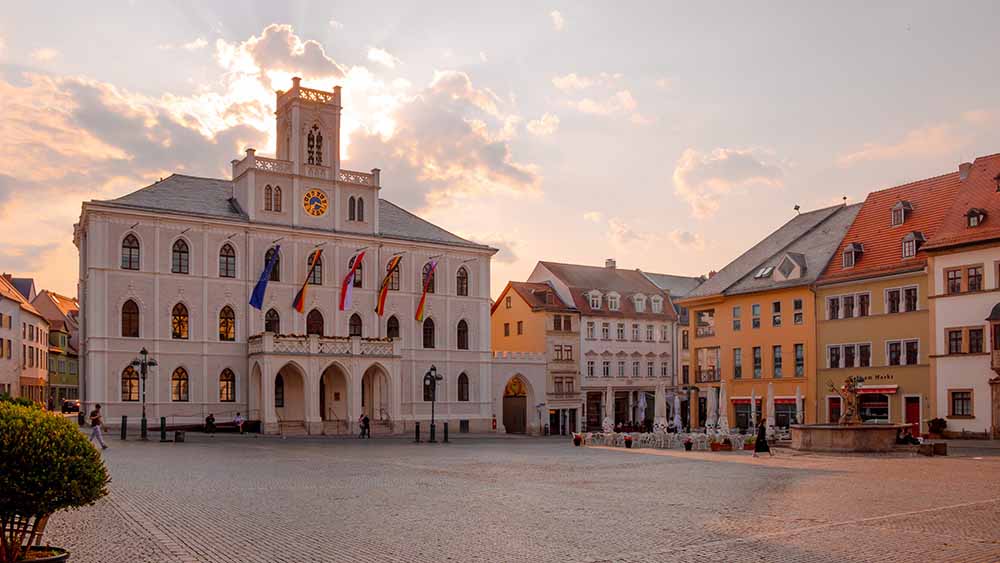
Weimar Town Hall at sunset
The view across the market square in Weimar's old town shows the neoclassical town hall bathed in warm evening light, clearly anchoring the scene in the cultural city of Weimar. This makes the ensemble around the market square, the proximity of the city palace, and the Goethe-Schiller city a clearly recognizable Weimar motif in Thuringia.
The warm light of the sunset settles over Weimar's market square, illuminating the bright facade of the town hall and the colorful neighboring buildings. The square's wide open spaces and the softly colored sky create a tranquil, almost picturesque atmosphere that particularly highlights the historic ensemble.
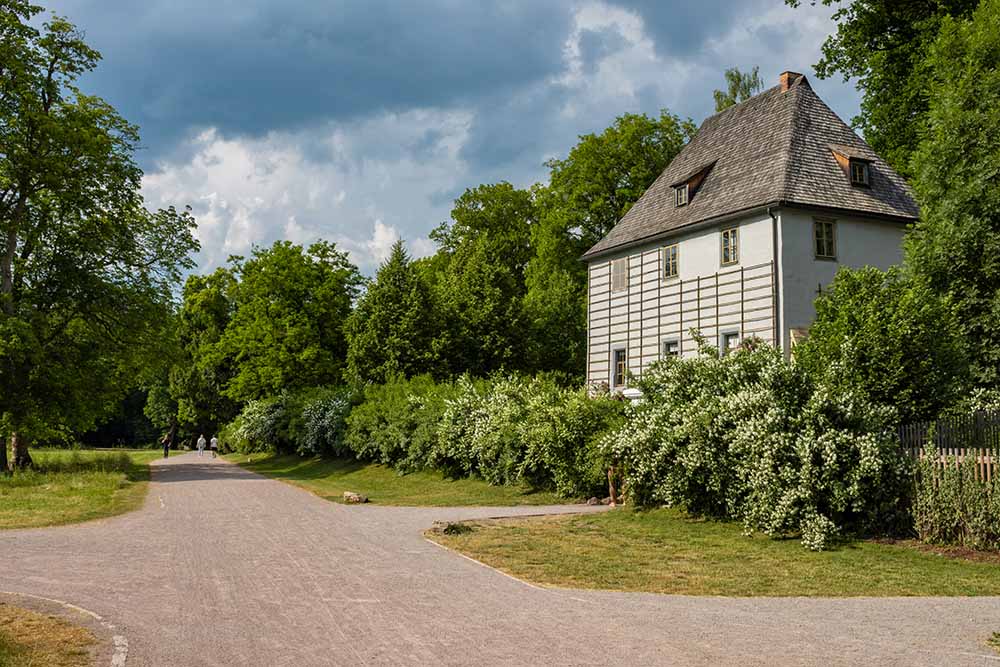
Goethe's garden house in the park on the Ilm, Weimar
The path leads directly through the park on the Ilm River, part of the UNESCO World Heritage Site "Classical Weimar," and precisely locates the garden house within the city's historic greenbelt. This creates an authentic impression of Weimar between the Ilm floodplain, the poets' heritage, and the tranquil parkland near the old town.
A bright path leads along the lush greenery directly towards the garden house. The simple facade stands serenely in the park, while the cloudy sky softly illuminates the scene.
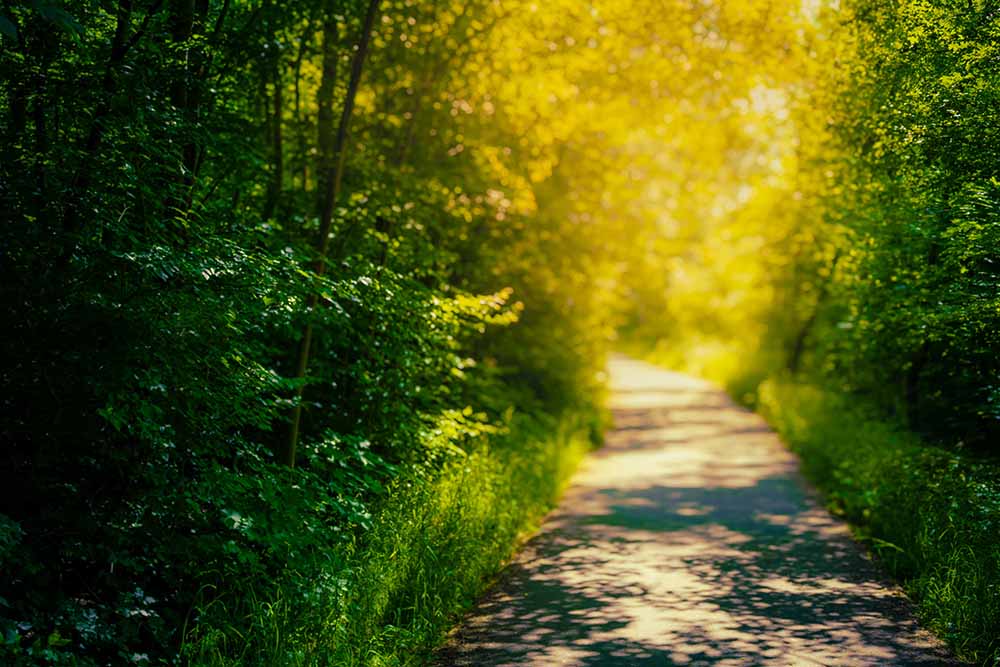
Hiking trail along the Ilm
This section of the path lies in the park on the Ilm River in Weimar and serves as a tranquil connection between the banks of the Ilm and the greenery of the old town. This creates a harmonious picture of the Weimar park landscape, which is part of the UNESCO World Heritage Site "Classical Weimar".
The narrow path winds through dense greenery, catching the warm sunlight. The light patches on the asphalt draw the eye into the distance, lending the scene a tranquil, summery feel.
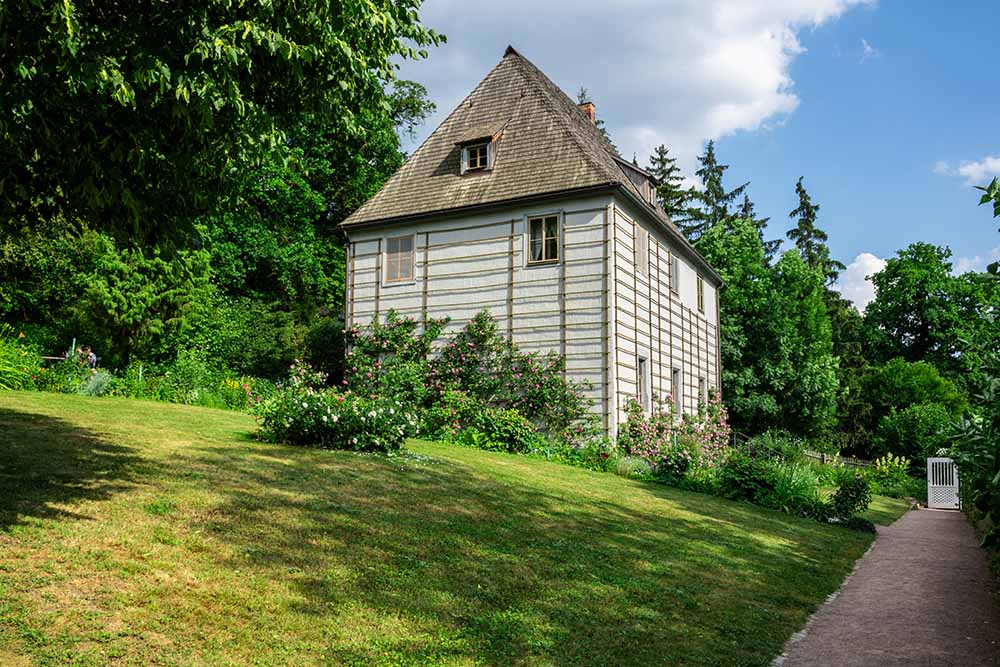
Goethe's garden house in Weimar
The image depicts the garden house in the park on the Ilm River, not far from the riverbank, and highlights the proximity to the historic walking paths leading towards the city center. This gives the scene a clear connection to Weimar, linking the Ilm Park, the poetic tradition, and the widely known cultural ensemble.
The path leads gently uphill, drawing the eye to the bright garden house, which stands peacefully among the dense bushes. The surrounding greenery and the expansive sky lend the scene a clear, open atmosphere.
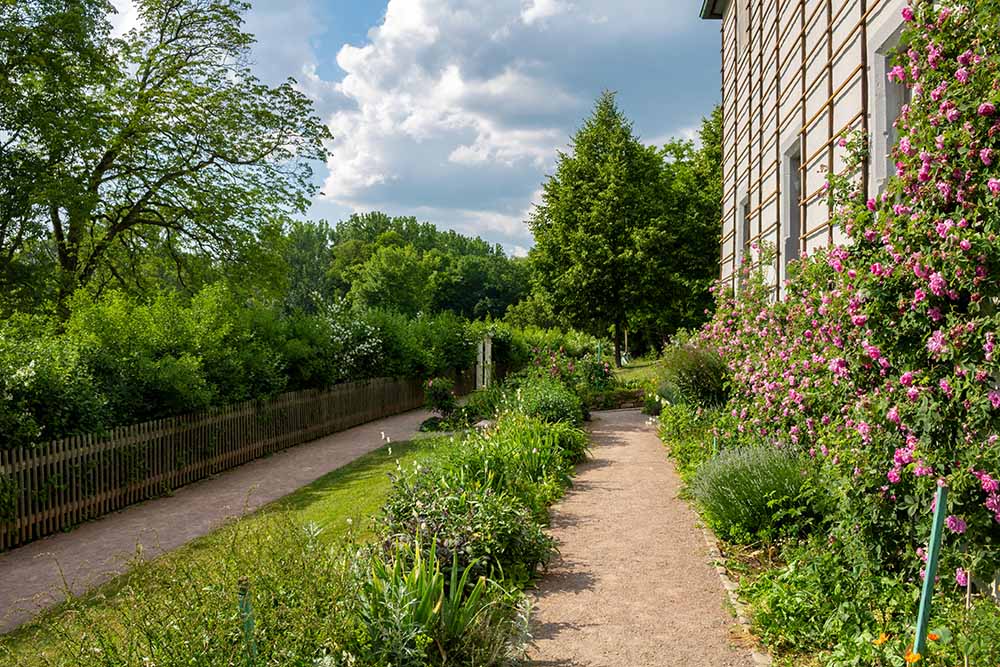
Garden at Goethe's garden house in Weimar
A narrow path leads along the garden, guiding the eye past flowerbeds and hedges to the house facade. The sidelight clearly highlights the leaves, the wall, and the cloud formations, giving the scene a tranquil, summery feel.
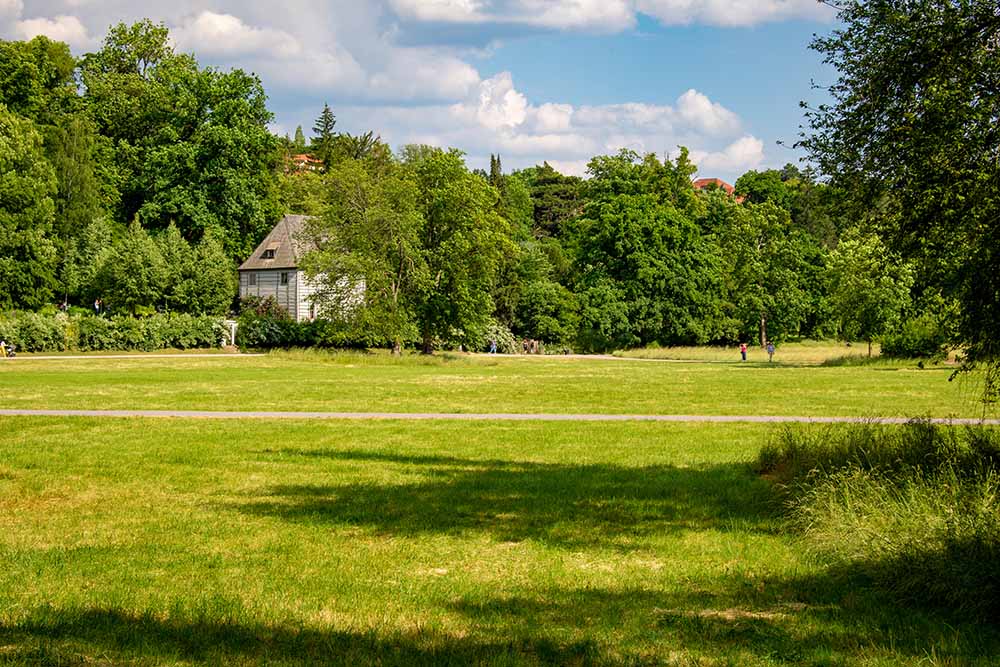
Park on the Ilm with Goethe's garden house, Weimar
The garden house is situated between the Ilm floodplain and Weimar's old town, along the historic promenade in the park on the Ilm River, part of the UNESCO World Heritage Site of Classical Weimar. The scene connects the open meadow with the well-known Goethe site and offers a tranquil view of the Weimar park landscape.
A wide meadow opens up a view of the garden house, nestled among tall trees. Sunlight and cloud shadows divide the space, creating a bright, open park atmosphere.
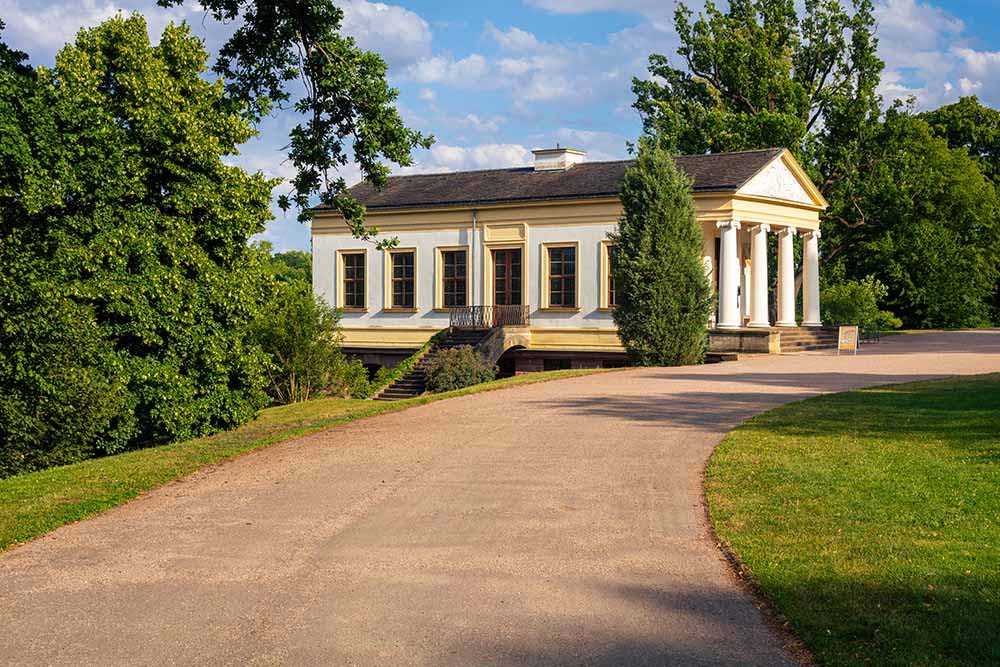
Roman House – Weimar, Park an der Ilm
The image leads along the winding path to the Roman House in the park on the Ilm River and integrates the neoclassical garden building into the Weimar park landscape. This creates a clear connection to the UNESCO World Heritage Site of Classical Weimar and to the historical axis between the Ilm floodplain, the palace park, and the old town.
The winding path leads directly to the bright Roman house, revealing its clean lines and elegant forms. Surrounded by lush greenery, the building appears serene and inviting within the expansive park.
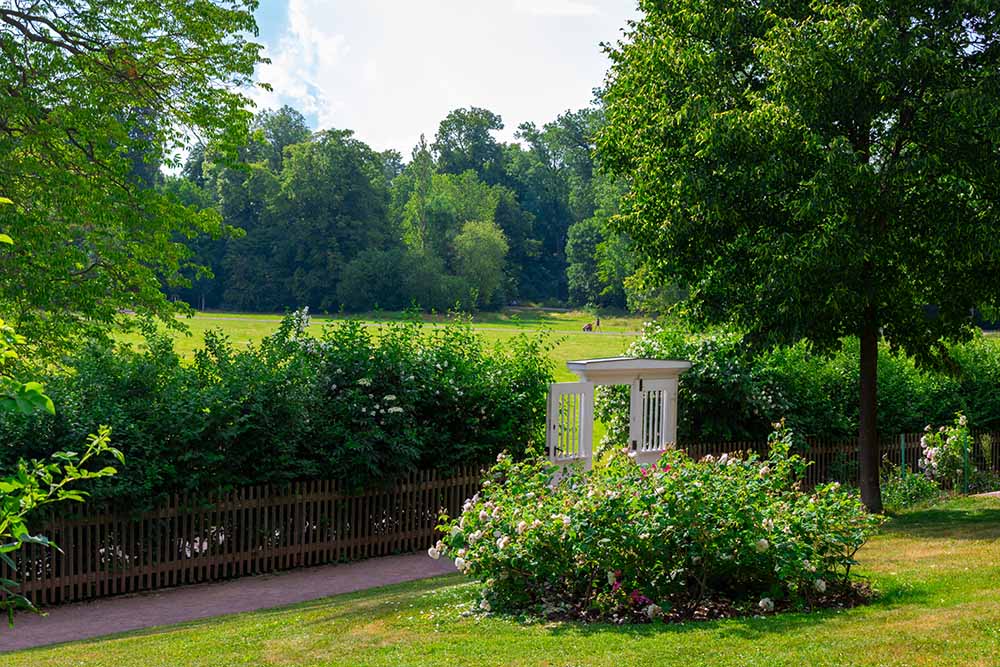
View from Goethe's garden house towards the Ilm Park
From the perspective of the garden house, the view opens up across hedges and meadow into the Ilm Park, making the vastness of the Ilm floodplain in Weimar tangible. The photograph thus connects to key locations in the cultural city and bridges the gap between the Goethe Ensemble, the park on the Ilm, and the path towards the old town.
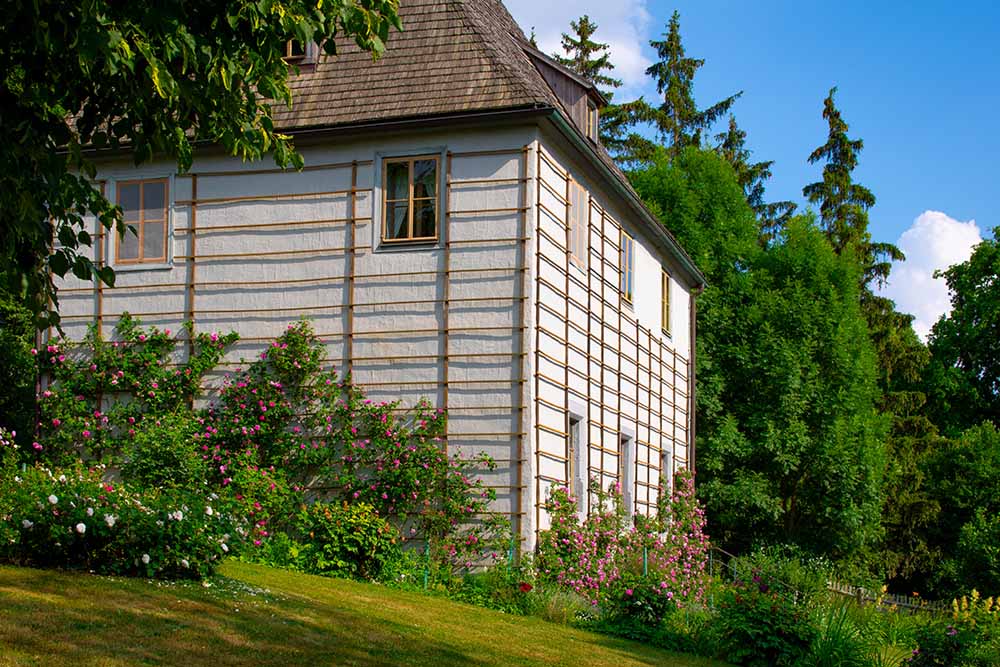
Goethe's Garden House, Weimar
The side view shows the garden house nestled peacefully among bushes and tall trees. The bright light accentuates the facade and lends the scene a clear, summery atmosphere.
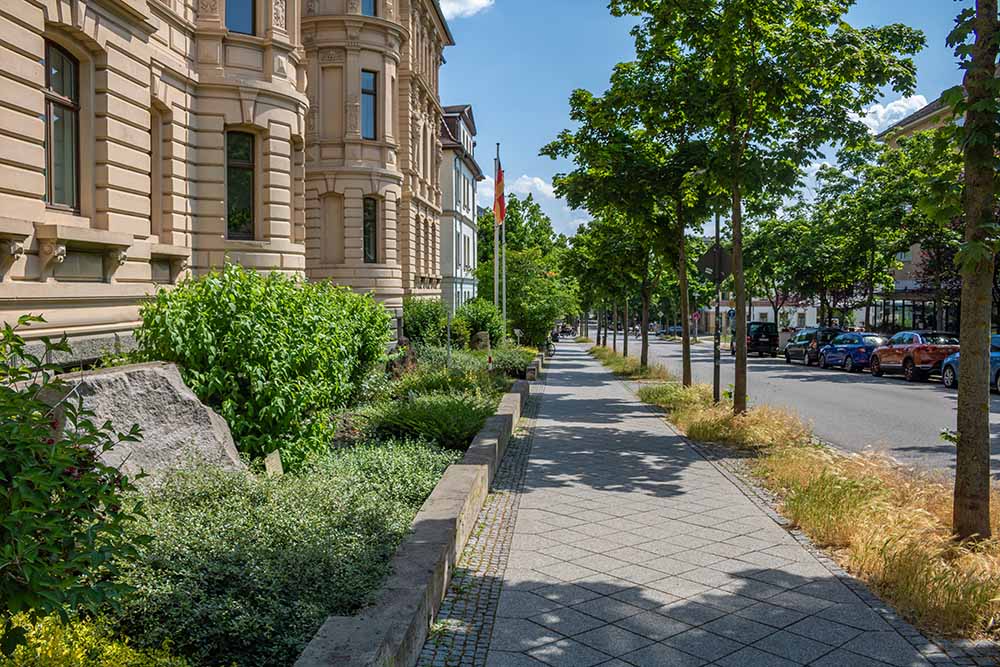
Weimar Carl-August-Allee
The avenue connects the area around Goetheplatz with Weimar's city center and showcases the historic Gründerzeit facades along a green urban axis. This creates a pleasant view of Weimar, where the row of trees, the sidewalk, and the row of houses make Carl-August-Allee appear as a tranquil boulevard.
A wide walkway runs alongside historic facades and is lined with young trees and plants. The sunlight makes the scene inviting and clearly highlights the structure of the houses and paths.