Gotha – Residence city in Thuringia
From ducal history to classical urban architecture
Gotha is a historic ducal residence in Thuringia with approximately 45,000 inhabitants and a long cultural and political history. For centuries, the city was the seat of the Duchy of Saxe-Gotha-Altenburg and developed into an important administrative and educational center. The cityscape is still characterized by this era, most notably by Friedenstein Castle, one of the largest early Baroque castle complexes in Germany. The historic old town around the market square, the town hall, and the burgher houses presents Gotha as a well-organized, clearly structured city with short distances. Parks, avenues, and vistas connect architecture and landscape, giving the city center an open structure. In addition to Baroque and Neoclassical buildings, there are also residential areas from the 19th and 20th centuries that complement the cityscape. Gotha combines history, urban development, and everyday life in a tranquil, focused way and forms an integral part of the Thuringian cultural landscape.
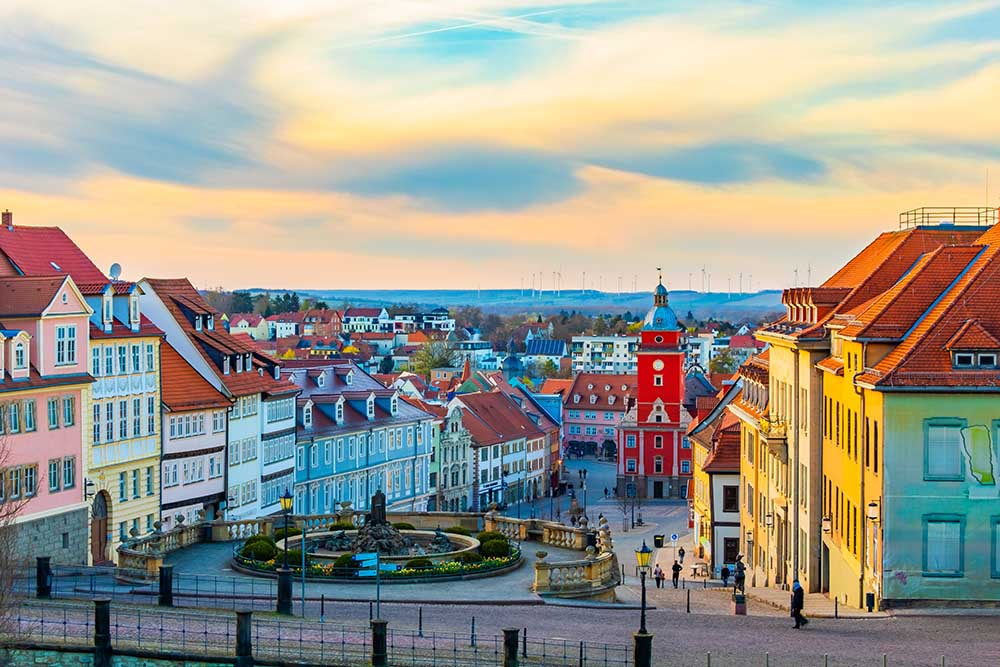
View from Friedenstein Castle of Gotha's market square and town hall
From Friedenstein Castle, the view extends across Gotha's market square to the town hall. In the foreground are open spaces and seating areas, behind which lies the continuous row of buildings in the old town. The town hall is centrally located and clearly identifiable by its facade. The photograph integrates the castle, market square, and town hall into a single, unified view.
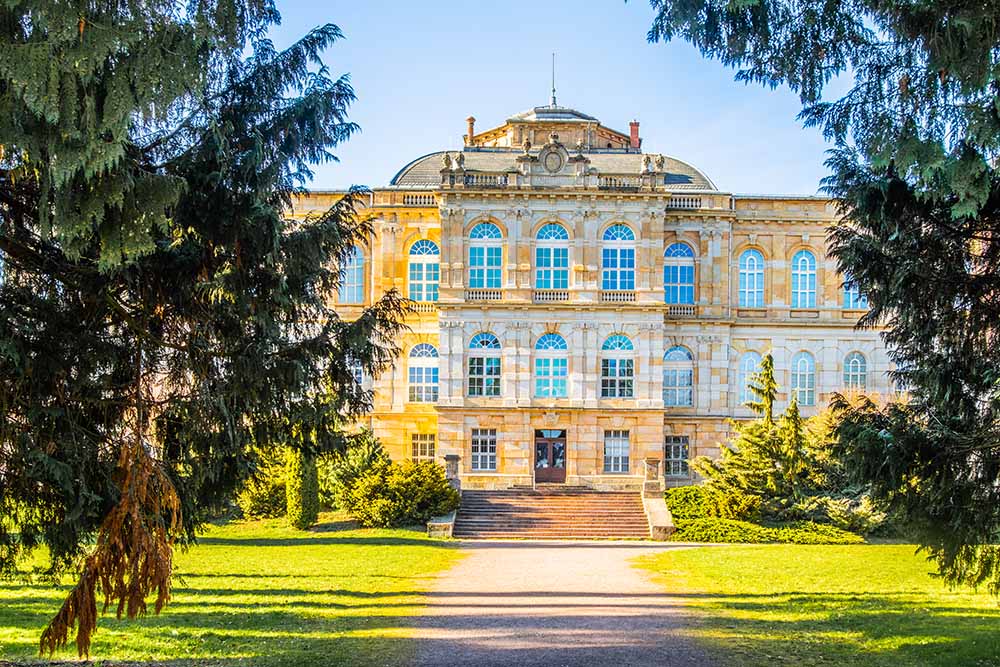
Ducal Museum Gotha in the historic park
The Ducal Museum Gotha stands freely within a park with lawns, trees, and a straight access path. The symmetrical facade, with its central section and regularly spaced window bays, is photographed from the front. Architecture and open space are clearly delineated. The photograph documents the museum building as an independent component of the historical ensemble.
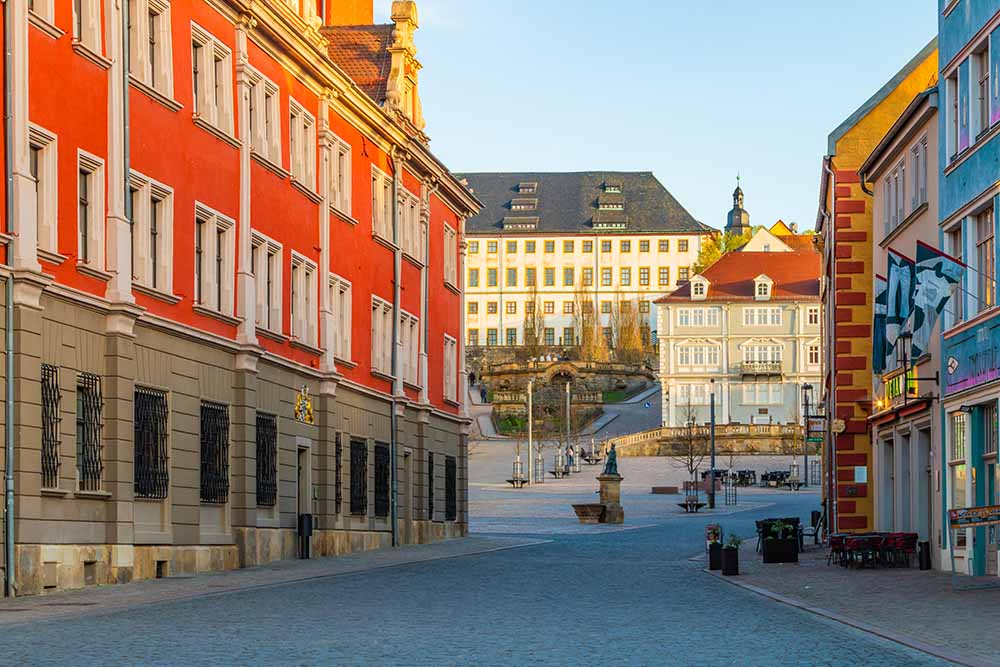
View from the main market square to Friedenstein Castle
The image shows the castle hill in Gotha's old town, looking towards Friedenstein Castle. Historic buildings with facades from different construction periods line both sides. The street leads directly towards the castle, which is visible in the upper part of the image. The photograph shows the direct line of sight between the main market square and the castle complex.
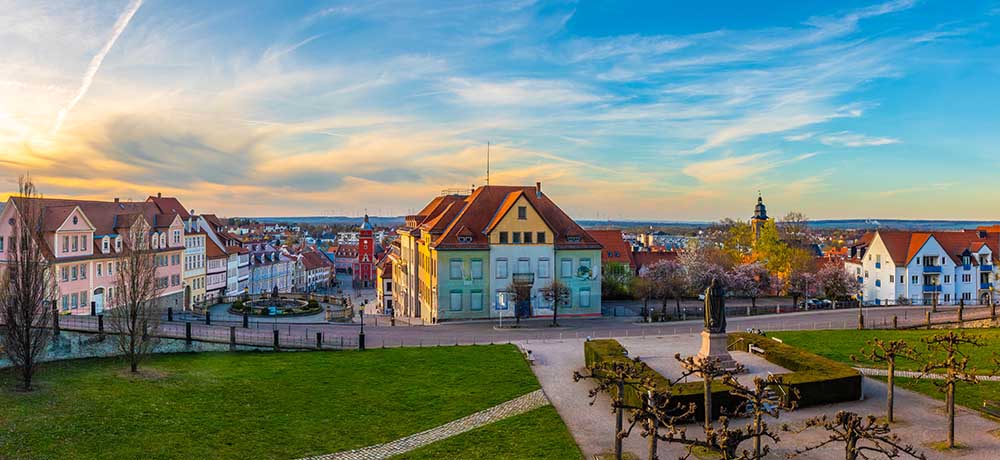
Panorama over Gotha with market square
An elevated panoramic view shows the market square of Gotha and adjacent parts of the old town. The square, green spaces, and surrounding townhouses are fully captured. The expansive image provides an overview of the buildings and spatial relationships within the city center. The photograph presents the market square within its urban context.
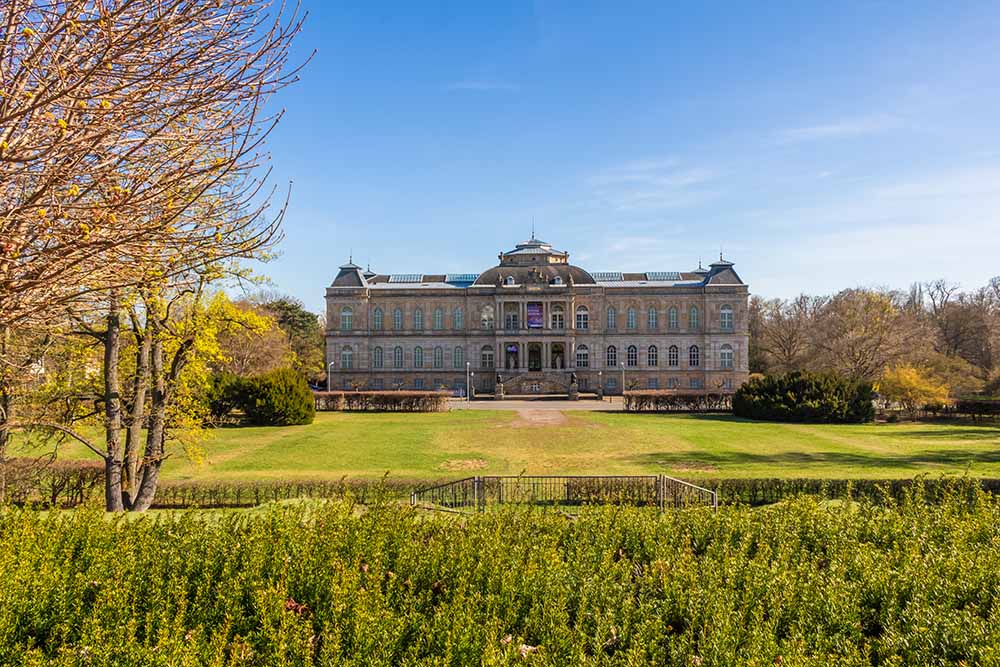
Symmetry and landscape against a historical backdrop
The Ducal Museum Gotha stands in a frontal view against an open lawn. The neoclassical building is symmetrically designed and stands out clearly against the surrounding greenery. Low hedges and open spaces define the foreground. The photograph documents the museum as a freestanding structure within the park.
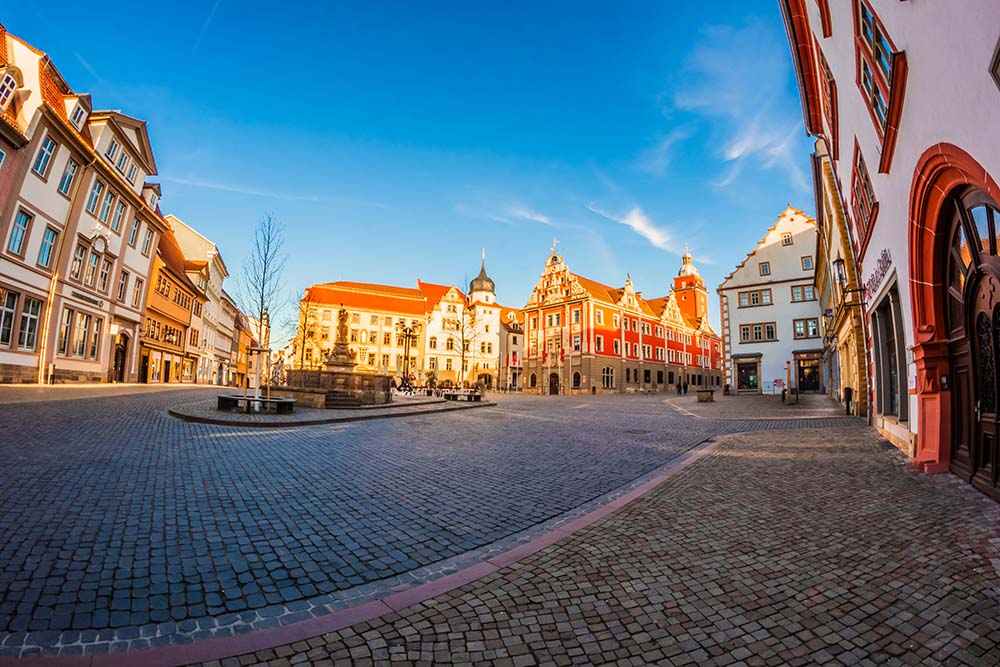
Historic architecture in the city center
A cobbled street leads through the historic city center of Gotha. On both sides stand brightly painted townhouses with continuous facades. The street opens up to the square, revealing the dense development of the old town. The photograph shows the inner-city space without traffic or activity.
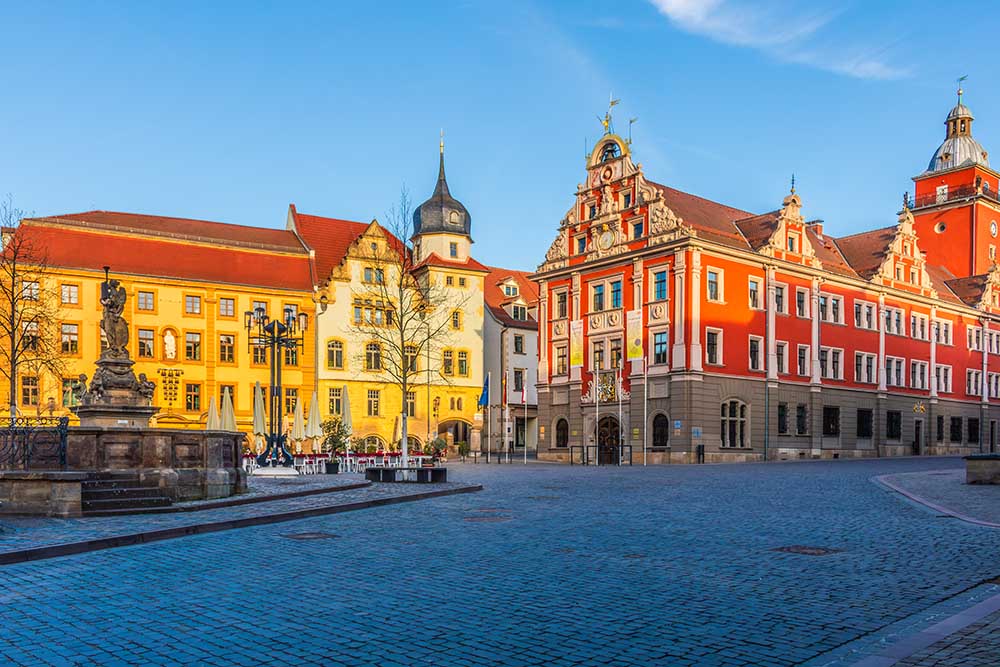
Gotha market square with town hall
The market square of Gotha is shown in a wide view. At its center is the historic town hall with its colorful facade, tower, and clearly structured architectural elements. Surrounding the square are multi-story townhouses with varying facades and roof styles.
The paved area of the market square is open and largely unobstructed. Streets, buildings, and the square are clearly separated. The photograph shows the market square as a centrally located place within Gotha's old town.
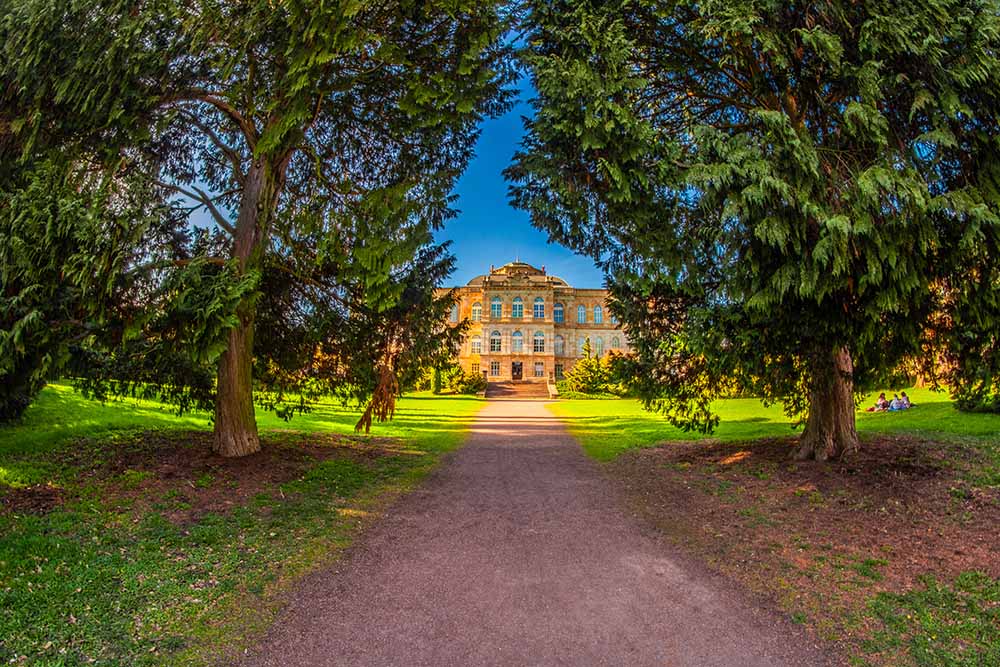
Ducal Museum Gotha – Fisheye
A straight path through mature trees leads directly to the Ducal Museum Gotha. Lawns and tall trees line the path and frame the building in the background. The perspective emphasizes the visual axis between the park and the museum. The photograph captures the interplay between the architecture and the landscaped green space.